~/projects/cc-portfolio·
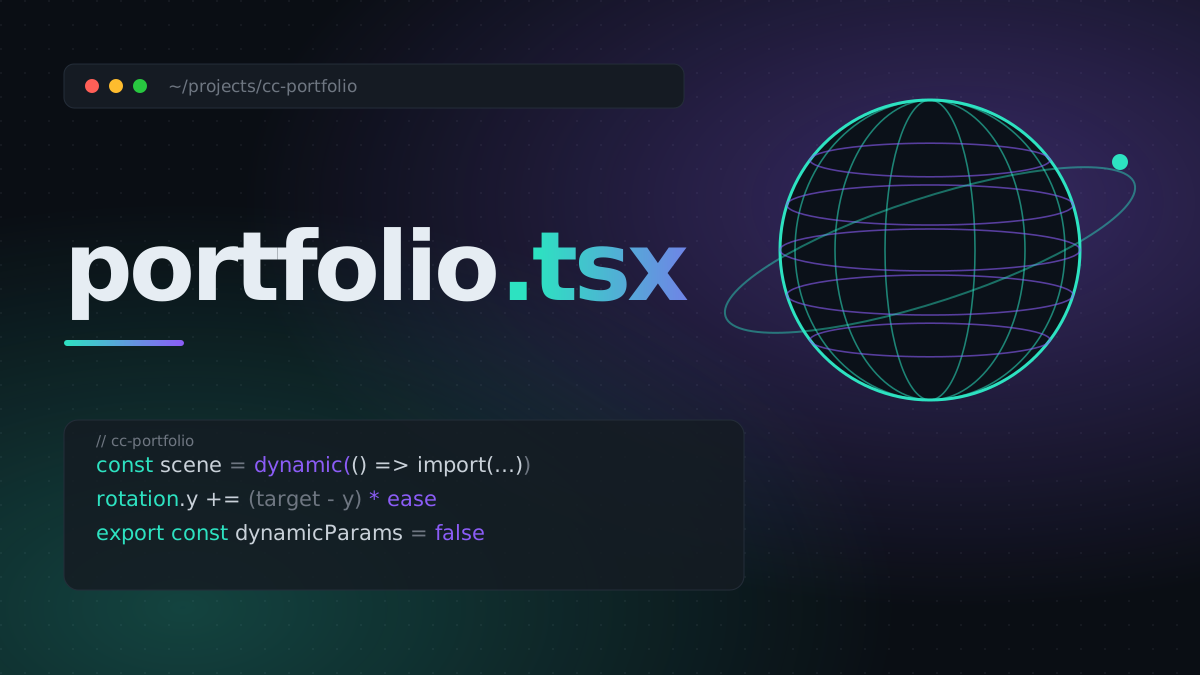
This Portfolio: Next.js 16 + Three.js
A fully static developer portfolio with MDX write-ups, a terminal-style hero and a WebGL globe that spins as you scroll, deployed to Dokploy with zero Docker config.
- Next.js
- TypeScript
- Tailwind
- Three.js
- MDX
- Dokploy
Why build it this way?
A portfolio is the simplest real product you can ship, which makes it a good way to learn the full loop: content → static build → deploy. Everything here is statically generated, and the only thing that runs in production is next start serving pre-rendered HTML.
- No database. Projects are
.mdxfiles, and the bio and stacks are JSON undercontent/. - No Dockerfile. Nixpacks detects a standard Next.js app from
package.json. - One client-heavy piece. The Three.js background is lazy-loaded and never server-rendered.
Content as files
Every project page comes from one file in content/projects/. The frontmatter drives the cards, and the body is rendered as MDX with syntax highlighting done at build time:
export function getAllProjects(): Project[] {
  return fs
    .readdirSync(PROJECTS_DIR)
    .filter((file) => file.endsWith(".mdx"))
    .map((file) => readProject(file.replace(/\.mdx$/, "")))
    .sort((a, b) => +new Date(b.date) - +new Date(a.date));
}
Then generateStaticParams turns that list into one static page per project:
export function generateStaticParams() {
  return getAllProjects().map(({ slug }) => ({ slug }));
}

// Anything not returned above is a 404, not an on-demand render.
export const dynamicParams = false;
The scroll-driven globe
The Earth behind the hero is about 18,000 dots on a sphere. A dot is kept only where a tiny land mask says there's land. That mask is a 1°×1° bitmap baked from public-domain Natural Earth data by scripts/generate-land-mask.mjs, so the browser downloads no textures or map data.
Scrolling doesn't set the rotation directly. It sets a target angle, and the globe eases toward it every frame, which gives the spin a bit of weight and inertia:
useFrame((state, delta) => {
  const target = startAngle + window.scrollY * RADIANS_PER_PX;
  // Cover 6% of the remaining angle per frame (scaled for 120Hz screens).
  const ease = 1 - Math.pow(1 - 0.06, delta * 60);
  angle.current += (target - angle.current) * ease;
  spin.current.rotation.y = angle.current;
});
It sits in a position: fixed layer with pointer-events: none, so it can never block a click or a scroll. It isn't mounted at all when the visitor prefers reduced motion.
Deploying
Push to GitHub, point Dokploy at the repo, and pick Nixpacks as the build type. Nixpacks runs pnpm install, pnpm build and pnpm start, with no extra config. The full walkthrough is in the README.